The Science of Scaling by Benjamin Hardy
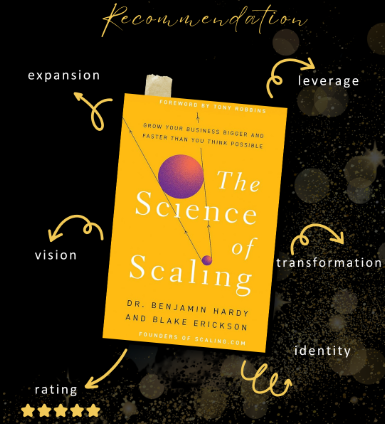
I've read a lot of business books.
Probably too many.
And one of the most powerful ideas in The Science of Scaling isn't actually about scaling at all.
It's the idea that you're often better off reading one great book 20 times than reading 20 different books once.
That hit me hard.
Because most of us are addicted to new information. We convince ourselves that the next podcast, the next book, or the next strategy is going to unlock everything.
But knowledge isn't the bottleneck.
Implementation is.
I've been rereading this book repeatedly, and every time I do, I see something different. Not because the book changed... but because I changed.
What resonates most is the framework of continually asking:
What do I need to peel away?
And what do I need to double down on?
That's it.
Simple.
Elegant.
Powerful.
The book argues that scaling isn't about doing more things. It's about becoming increasingly selective. The bigger you want to grow, the more ruthless you have to become about eliminating distractions, low-value activities, and opportunities that don't align with your future.
That lesson applies everywhere.
In business.
In investing.
In relationships.
In life.
The challenge isn't finding more opportunities. The challenge is filtering signal from noise.
Most people are drowning in options.
The highest performers are removing them.
The more I revisit this book, the more I realize that growth isn't about addition.
It's about subtraction.
Removing the activities that drain energy.
Removing the investments that consume brain space.
Removing the commitments that don't move the mission forward.
Then taking the things that do work and pouring gasoline on them.
That's the real science of scaling.
Not complexity.
Not hustle.
Not doing more.
Doing less... better.
And doing it repeatedly enough that the right things compound.
So here's the question this book keeps forcing me to ask:
What are you holding onto that needs to be peeled away... and what deserves far more of your attention than it's currently getting?

Comments